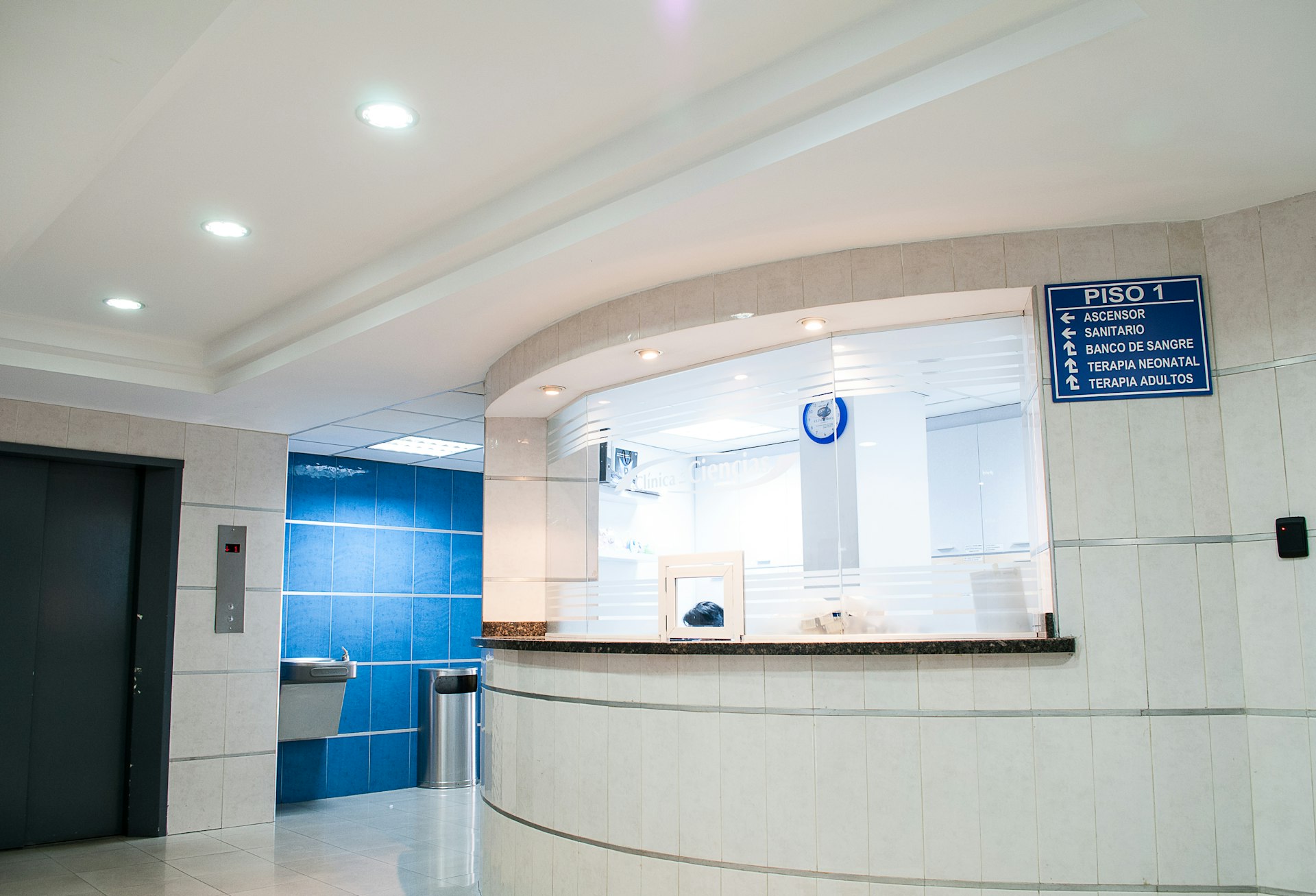
Healthcare real estate in the United States is consolidating rapidly. Private equity is driving acquisitions and roll-ups across dental, urgent care, veterinary, ophthalmology, dermatology, and outpatient speciality practices. Each acquisition is followed by the same operational question: what condition are these facilities actually in, and what will it cost to bring them to the new brand standard?
For the Director of Construction or VP of Facilities at a 40-location dental support organisation or a 60-clinic urgent care network, this is not an academic exercise. It is a capital planning problem that requires consistent, reliable data from every location in the portfolio — often under significant time pressure, and almost always across a geographic footprint that spans multiple states.
The site survey is the foundation of every decision that follows: which locations get renovated first, what the scope of each renovation looks like, how the prototype adapts to each building, and what the programme costs. When that foundation is incomplete or inconsistent, the consequences are felt at every subsequent stage.
Why Healthcare Facilities Are Harder to Document Than Standard Retail
A dental practice or urgent care clinic may occupy the same 2,000 to 5,000 square foot footprint as a retail store — but the interior complexity is dramatically different. Healthcare environments have a density of mechanical, electrical, and plumbing systems that far exceeds typical commercial space.
Specialised plumbing — dental operatory plumbing includes vacuum suction, compressed air, nitrous oxide delivery, and water supply lines running to each chair. Veterinary clinics have surgical drainage, treatment table plumbing, and kennelling wash-down systems. Urgent care facilities may have lab sinks, specimen handling, and decontamination stations. None of this appears on a standard floor plan.
Dedicated electrical loads — X-ray equipment, CBCT scanners, autoclaves, sterilisation equipment, and diagnostic imaging all draw significant power and often require dedicated circuits. Knowing which panels serve which loads, and how much capacity remains, determines whether the renovation can add equipment or needs a service upgrade.
HVAC and air handling — clinical environments require higher air change rates than standard commercial space. Surgical suites, isolation rooms, and imaging rooms may have dedicated air handling. Existing HVAC capacity and configuration directly affect what the remodelled space can support.
Infection control spatial requirements — the relationship between clean and contaminated zones, the location of sterilisation areas relative to treatment rooms, and the workflow paths through the clinical space are all compliance-relevant spatial configurations that the renovation design must accommodate.
Equipment that doesn't move easily — dental chairs with integrated plumbing and power, imaging equipment with lead-lined walls, surgical lights with ceiling-mounted arms. Documenting what is installed, where it connects, and what condition it is in determines the cost and complexity of every remodel decision.
A dimensional survey that measures the walls and produces a floor plan captures the container. It misses everything that makes a healthcare facility survey consequential: the systems, the equipment, the conditions, and the constraints that drive the renovation scope and budget.
The Multi-Site Scale Problem
When a PE-backed dental group acquires a portfolio of 30 practices, the immediate need is a consistent picture of every location. Which facilities are in good condition and can operate as-is with cosmetic updates? Which need significant renovation? Which have MEP infrastructure that will not support the new equipment package? Which have compliance issues that need to be addressed before the next accreditation cycle?
Answering these questions from a portfolio of individually commissioned surveys — each done by a different local firm, in a different format, with different assumptions about what to document — is effectively impossible. The data does not compare. The design team cannot plan a standardised renovation approach when every location's baseline information is structured differently.
This is the same consistency problem that affects every multi-site documentation programme, but amplified by the clinical complexity. In retail, an inconsistent survey might miss a ceiling condition or an HVAC unit. In healthcare, it might miss a medical gas line, an inadequate electrical service, or a ventilation deficiency that triggers a compliance issue mid-renovation.
What the Programme Team Actually Needs
A healthcare multi-site survey programme should produce the same structured deliverable at every location — adapted for the clinical speciality but consistent in format, depth, and platform delivery. For a dental group, an urgent care network, or a veterinary chain, that means:
Navigable Digital Twin
A Matterport model of the entire facility — reception, treatment rooms, operatories, sterilisation, lab, imaging, staff areas, mechanical rooms. Every member of the project team can explore the space remotely: the architect adapting the prototype, the equipment supplier checking clearances, the MEP engineer tracing services, the compliance consultant reviewing spatial relationships.
Clinical Equipment and Asset Schedule
Every piece of installed clinical equipment documented by location, make, model, age where determinable, and visible services connections — power, plumbing, gas, data. This applies equally to treatment chairs, imaging equipment, sterilisation units, laboratory equipment, and cabinetry with integrated services. At programme scale, this data enables equipment procurement planning, identifies standardisation opportunities, and reveals which locations need service upgrades to support the new equipment specification.
MEP Documentation with Thermal Imaging
Healthcare MEP documentation goes beyond standard commercial scope. Electrical distribution from main service through panels to dedicated clinical circuits. Plumbing including specialised medical gas, vacuum, and waste systems. HVAC including air handling units, exhaust systems, and any dedicated clinical ventilation. Thermal imaging identifies active services above ceilings and behind walls without invasive investigation — critical in clinical environments where opening walls or ceilings during operating hours is impractical.
Conditions Report with Compliance Indicators
A structured conditions assessment covering the building envelope, interior finishes, flooring (critical in clinical infection control), ceiling systems, restroom facilities, ADA accessibility, emergency egress, and fire safety systems. Findings are prioritised P1 through P3 so the programme team can immediately identify which locations have conditions that need addressing before or during the renovation, and which are cosmetic improvements that can be deferred.
Programme-Level Platform Access
All deliverables for every location accessible through ScopeWalk — structured identically, searchable, comparable. The facilities director can sort the entire portfolio by equipment age, conditions priority, or MEP capacity. The design team can pull up any location's digital twin and conditions report without requesting files. The capital planning team can build accurate budgets from consistent, verified data rather than estimates and assumptions.
The Sectors Driving Demand
The healthcare subsectors with the most active multi-site renovation and expansion programmes in the US market include:
Dental support organisations (DSOs) — the fastest-consolidating segment of healthcare real estate. PE-backed DSOs are acquiring and rolling up dental practices at unprecedented rates. Every acquisition triggers a documentation and renovation cycle. Portfolios of 20 to 200+ practices, each with specialised plumbing, dedicated imaging equipment, and clinical workflow requirements.
Urgent care and walk-in clinics — brands expanding organically and through acquisition, often taking over retail spaces that need conversion to clinical use. Existing conditions documentation determines whether a shell space or second-generation retail location can support the MEP demands of an urgent care operation without prohibitively expensive service upgrades.
Veterinary corporate groups — a consolidation wave matching the dental sector. Multi-location veterinary groups are standardising facility standards across acquired practices. Surgical suites, imaging rooms, kennelling, and isolation areas all have documentation requirements that exceed standard commercial survey scope.
ABA and autism therapy clinic operators — one of the fastest-growing centre-based care segments. These clinics need documentation that captures ceiling height for gross motor spaces, acoustic separation, secure reception and elopement prevention features, and exterior play area feasibility. Our guide to ABA clinic site surveys breaks down the spatial and safety requirements that standard commercial surveys miss.
Outpatient speciality practices — dermatology, ophthalmology, orthopaedics, and physical therapy groups running multi-site renovation programmes. Each speciality has its own equipment profile and MEP demands that must be documented to plan the renovation accurately.
Pharmacy and compounding facilities — retail pharmacy chains and compounding operations with clean room requirements, environmental controls, and regulatory documentation obligations similar to other controlled environments.
Surveying Active Clinical Environments
Healthcare facilities present specific operational constraints that the survey methodology must accommodate. Patients are present. Clinical procedures are underway. Equipment is in use. Infection control protocols apply.
Our approach is to coordinate directly with the practice manager or operations team at each location to identify the optimal survey window. For dental and veterinary practices, this is often a combination of early morning before the first appointment and end-of-day after the last patient. For urgent care facilities that operate extended hours, we identify the lowest-traffic window and work efficiently within it.
The capture equipment is non-contact, non-disruptive, and does not require any clinical areas to be cleared. No equipment needs to be powered down or moved. A typical small healthcare facility — 2,000 to 5,000 square feet — can be fully documented in two to four hours, including the digital twin, conditions assessment, equipment schedule, above-ceiling MEP investigation, and narrated walkthrough.
From Acquisition to Renovation: The Documentation Timeline
In the PE-backed healthcare consolidation model, site documentation serves two distinct phases:
Pre-acquisition due diligence: surveying a representative sample of the target portfolio to validate assumptions, identify material capital risks, and calibrate the capital reserve. This is the same portfolio due diligence approach that applies across asset classes, but with the added complexity of clinical equipment and compliance documentation.
Post-acquisition renovation programme: comprehensive documentation of every location to support the design team's prototype adaptation, equipment procurement planning, and construction budgeting. When the pre-construction survey data from every location is structured identically and delivered through a single platform, the renovation programme can move from planning to execution significantly faster.
The most efficient approach is to use the same documentation methodology and platform for both phases — so the due diligence data feeds directly into the renovation programme without reformatting, reinterpreting, or re-surveying.
Common Questions About Healthcare Multi-Site Surveys
What types of healthcare facilities do you survey? +
Can you survey a healthcare facility while it is seeing patients? +
What MEP documentation do you provide for healthcare spaces? +
How does this help with healthcare compliance documentation? +
Getting Started
If you are managing a healthcare portfolio renovation or expansion programme and need consistent, comprehensive site data from every location, tell us about it. We will respond within one business day with a scope recommendation and all-in pricing across your locations — travel included.
Alturascope operates across all 50 US states, every Canadian province, and the United Kingdom under a single-vendor model. One brief. One standard. Every site.